Vancouver Specials are the boxy 1965 to 1985 houses that fill East Van streets. Here is what they cost now, what inspectors find, and what BC's multiplex rules let you build on the lot.
Written by Hamidreza Etebarian on

A Vancouver Special is the boxy two-storey house that builders put up across Vancouver from about 1965 to 1985, and 39 active listings on Zealty describe themselves as one right now, at a median asking price of $1,780,000. That sits well under the $2,700,000 median for all 1,347 detached houses for sale in the City of Vancouver. Of those 39, 35 are on the East Side, 33 are priced under $2 million, and most sit on a 33-foot lot. These figures come from Zealty's active listings on October 28, 2026. This guide covers how the design works, what inspectors tend to find, when renovating beats rebuilding, and what BC's multiplex rules now allow on the same lot.
You can usually spot one from the street. It has two full storeys, a shallow, nearly flat roof, brick or stone on the lower level with stucco above, and a balcony running across the front. The kitchen, living room and main bedrooms are upstairs. The ground floor sits at or just below grade and holds more bedrooms, a rec room, or a separate suite.
Builders worked from near-identical plans, so these houses were cheap to build and quick to permit. The design also made the most of the zoning of the day. The lower floor was treated as a basement, which let a builder fit far more floor area on a standard city lot than a typical house of the time. The Vancouver Heritage Foundation notes that many first buyers were families who had come from post-war Europe and used the ground floor for relatives or rental income. It estimates the city had about 10,000 of them by 1985. The city changed its rules in the mid-1980s to stop new ones being built.
The name now works as a selling point. Agents use it in listing remarks because it tells a buyer something useful in two words: a big, plain, two-level box on a standard lot, usually with room for a suite downstairs.
To get a wider sample than the listings that use the name, we pulled every active detached house in the City of Vancouver built in the Vancouver Special era, meaning houses 41 to 61 years old. On October 28, 2026 there were 160 of them, with a median asking price of $2,184,500. Houses 15 years old or newer had a median of $4,286,000 across 233 listings. Not every house from that era is a Vancouver Special, but on the East Side a large share are.
Sign up free to unlock real sold prices and sold dates across Greater Vancouver, Fraser Valley, and Chilliwack.
See Sold PricesFree account required · sold data is hidden until you sign in.
On the East Side, a newer house asks about $826,000 more than an era house. Some of that buys a bigger home: the newer houses have a median of 3,940 square feet against 2,621 for era houses, and a median frontage of about 50 feet against 40. The rest is the price of a house that doesn't need work. When you buy a Vancouver Special, most of what you pay for is the land. The City of Vancouver housing market page tracks how those numbers move month to month.
These houses are now 40 to 60 years old, and the same few items come up in most inspection reports. None of them rule a house out. Each one has a cost you should price into your offer.
Asbestos is the other item to plan for. WorkSafeBC, BC's workplace safety agency, says many older homes contain it and tells homeowners to have a home tested before a renovation or demolition. Since January 1, 2024, asbestos abatement contractors in BC must be licensed (WorkSafeBC homeowner FAQ, revision 09/23, checked October 2026). Budget for a survey before any work starts.
A full inspection is cheap next to any of these repairs. Our BC home inspection cost guide shows what to expect to pay and what a standard inspection leaves out.
A Vancouver Special is a simple rectangle with a lot of floor area, and that makes it a good candidate for renovation. A common plan keeps the shell, replaces the windows, fixes the envelope, redoes the kitchen and bathrooms upstairs, and turns the ground floor into a suite that helps carry the mortgage. If the structure and foundation are sound, this keeps the house's existing floor area and avoids the cost and time of building new.
Rebuilding makes more sense when the windows, envelope, wiring and plumbing all need replacing at once. At that point the renovation budget starts to look like a new build, and a new build can use the multiplex rules covered below. The roughly $826,000 East Side gap between era houses and newer houses is the margin a rebuild has to work within. It has to cover demolition, design, permits, construction and carrying costs, so it is not profit.
Before you choose, get a contractor's estimate for both paths on the specific house. Our guide to buying a fixer-upper in BC walks through renovation cost against resale value, and the laneway house guide covers the middle option: keep the Special and add a laneway home at the back.
BC now sets a minimum for how many homes Vancouver's single-family zoning must allow. Under the Vancouver Charter (section 565.03) and the Vancouver Zoning Bylaw Regulation, B.C. Reg. 264/2023 (consolidation current to October 20, 2026), the City's zoning must permit at least 3 homes on a parcel of 280 square metres or less and at least 4 homes on a larger parcel. On parcels of 281 square metres or more within 400 metres of a bus stop with frequent service (a bus every 15 minutes on average, 7 a.m. to 7 p.m. on weekdays and 10 a.m. to 6 p.m. on weekends), the minimum is 6. Land with a certified hazardous condition is exempt, and transit-oriented areas follow separate rules.
A standard 33 by 122 foot Vancouver lot is about 4,026 square feet, or about 374 square metres, which is above the 280 square metre line. So the lot under a typical Vancouver Special falls in the group where at least 4 homes must be allowed, or 6 if it sits near a frequent bus route. The Special was built to use as much of its lot as the old rules allowed, and that same standard lot is what the new rules were written around.
Those provincial numbers are a floor. Vancouver applies them through its own R1-1 zone, which sets the floor area, height, setbacks and lot-size rules for each building type, and those details decide what you can actually build on a given lot. Read the R1-1 district schedule on the City of Vancouver website, or have a designer check the lot, before you price a rebuild. This section is general information, not legal or planning advice.
If you would rather buy into a new multiplex than build one, our guide to buying a multiplex unit in Vancouver covers strata setup, fees and what to check before you buy.
A Vancouver Special is one of the cheaper ways into a detached house on a standard City of Vancouver lot in BC today, and the lot under it can now hold more homes than when it was built. Price the windows, envelope and systems before you offer, and decide early whether you are buying a house to renovate or land to rebuild. Browse City of Vancouver houses on Zealty with live MLS® data updated throughout the day.

Vancouver multiplexes put three to six strata homes on a former single-family lot. Here is what you own, what the small strata changes, and the tax rules for a new unit.

A fixer-upper can be a smart way into an expensive BC market, or a money pit. Here is how to weigh renovation cost against resale value, finance the work, and spot the red flags worth walking away from.
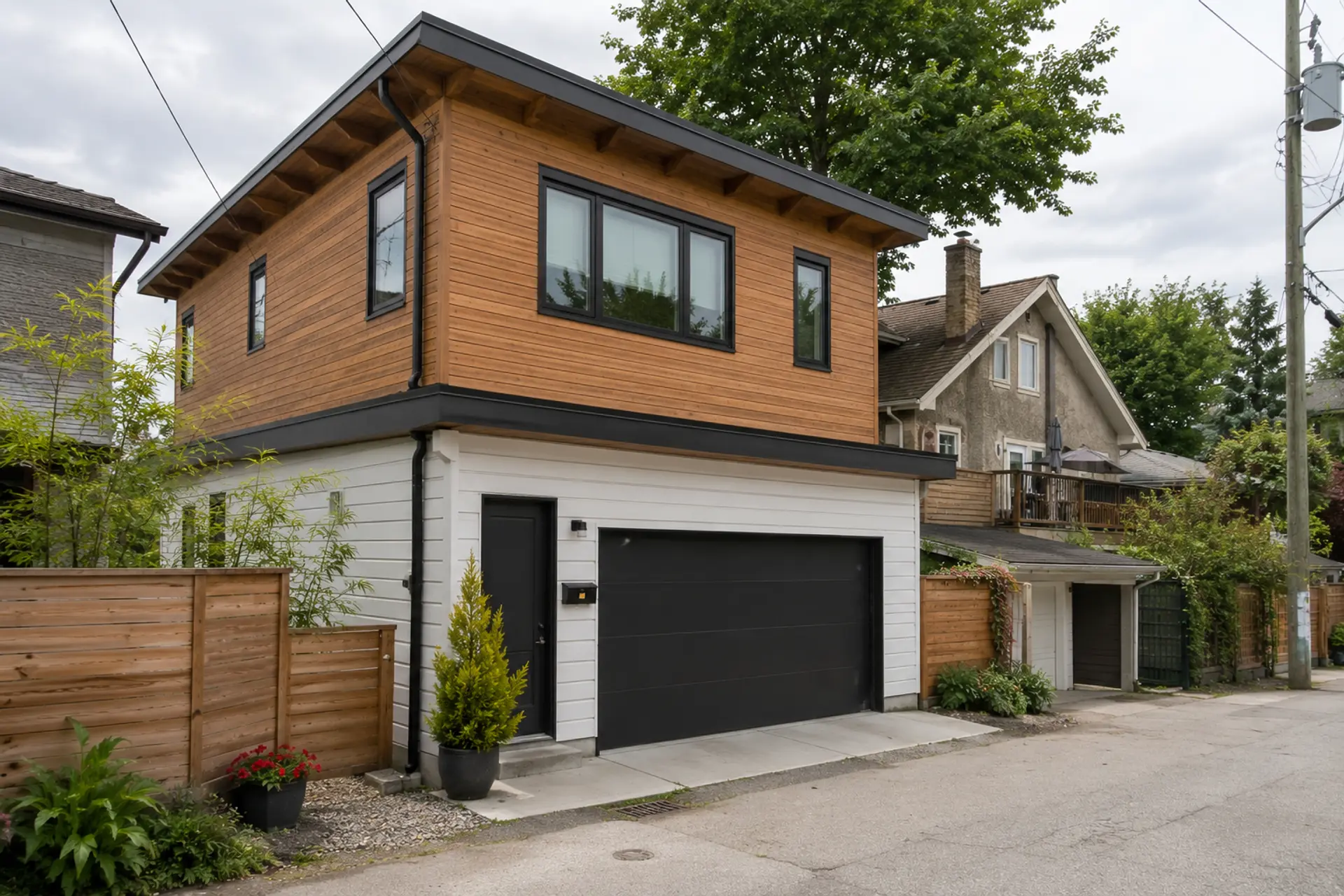
A Vancouver laneway house costs $400K-$650K to build, takes 12-22 months, and earns 3.8-5.2% net rental yield. Vancouver's R1-1 zoning lets you add one as of right — rental only, not sold separately.


