Vancouver multiplexes put three to six strata homes on a former single-family lot. Here is what you own, what the small strata changes, and the tax rules for a new unit.
Written by Hamidreza Etebarian on

A multiplex unit in Vancouver is a strata-titled home in a new building of three to six units, built on a residential lot that used to hold one house. Townhouses, the MLS category where these units usually appear, have a median asking price of $1,539,500 across 998 active listings in the City of Vancouver, against $2,698,000 for a detached house (Zealty data, October 20, 2026). That gap is why buyers look: a ground-oriented home on a quiet street for a little over half the price of the house next door. This guide explains Vancouver's multiplex rules, what you actually own, and the checks that matter more in a six-unit strata than in a tower.
Vancouver City Council approved its missing middle housing changes on September 14, 2023, and the former RS single-family zones were folded into a new R1-1 zone that fall. The R1-1 district schedule in the City of Vancouver Zoning and Development By-law allows a multiplex of 3 to 6 strata units on one lot, or up to 8 units when every unit is secured rental.
Lot size sets the unit count. Under that schedule, a multiplex of 3 or 4 units needs at least 306 m² of site area and 10.0 m (32.8 ft) of frontage, 5 units need 464 m² and 13.4 m (44 ft), and 6 units need 557 m² and 15.1 m (49.5 ft). A typical 33-foot east side lot therefore tops out at four strata units, and the six-unit buildings sit on wider lots.
The City permits multiplexes as new construction only, so an existing house cannot be converted into one. Combined with the late-2023 start date, that means almost every multiplex unit on the market is a presale, a just-finished unit, or a resale of a building completed in the last couple of years. Uptake has been fast: by the end of March 2025 the City had accepted about 370 multiplex applications covering roughly 1,500 homes, and multiplexes made up about half of all R1-1 applications in 2024 (City of Vancouver memo to Mayor and Council, May 29, 2025).
Vancouver started its multiplex program before the Province acted, but the same idea now applies across British Columbia. BC's Housing Statutes (Residential Development) Amendment Act, 2023 (Bill 44) requires municipalities with more than 5,000 people to allow small-scale, multi-unit housing on lots zoned for single-family or duplex homes. Local governments had to update their bylaws by June 30, 2024 (BC Ministry of Housing).
The provincial minimums, as published by the BC government (page updated January 20, 2026):
Sign up free to unlock real sold prices and sold dates across Greater Vancouver, Fraser Valley, and Chilliwack.
See Sold PricesFree account required · sold data is hidden until you sign in.
A follow-up law, BC's Housing and Municipal Affairs Statutes Amendment Act, 2025 (Bill 25), closed gaps in which zones count, with bylaw updates due by June 30, 2026. For a buyer, the practical point is that each city writes its own version. A multiplex in Burnaby, Victoria or Kelowna follows that city's bylaw, so unit counts, parking and lot rules differ from Vancouver's R1-1.
You buy a strata lot under BC's Strata Property Act, the same statute that governs condo towers and townhouse complexes. Your unit is yours, and the roof, the exterior walls, the shared paths and most of the yard are common property owned by all the owners through the strata corporation. Private patios or yards are often set aside as limited common property for one unit, so check the strata plan to see which outdoor space is actually yours. Our guide to what a strata is in BC covers the basics.
The difference is scale. With three to six owners, the strata council is most of the building, and a roof repair or an insurance renewal comes down to a few neighbours agreeing. Many small stratas manage themselves without a management company, which keeps fees low but leaves the bookkeeping, the annual general meeting and the insurance renewal to volunteers.
Insurance deserves a close look. BC's Strata Property Act (section 149) requires the strata corporation to insure the buildings on the strata plan for full replacement value, and in a multiplex that premium is split between a handful of owners instead of hundreds. Read the fee breakdown alongside our article on strata fees in BC.
Our checklist for assessing a strata building before you buy applies here too. These six points matter more in a small multiplex strata.
A new multiplex unit is a new home, so the 5% federal GST applies to the price. Two programs can reduce the bill. This section is educational, not tax advice, and a notary or lawyer should confirm your eligibility before you sign.
Those thresholds fall right where many east side multiplex units are priced. Among the 580 townhouse-category listings in the City of Vancouver built in the last two years, asking prices start at $449,900 and 54 of them ask between $1,000,000 and $1,250,000, so a $50,000 difference in price can change both your tax and your rebate. Our comparison of new build vs resale in BC walks through the other cost differences.
Prices split sharply by side of the city. Live Zealty data for townhouse-category listings on October 20, 2026:
These figures include older townhouse complexes as well as multiplexes, so treat them as a range rather than a multiplex-only price. To compare a specific unit, pull up the sold prices and price history of nearby new townhouses on Zealty, and check what detached houses on the same street sold for. If a unit costs close to what a small house nearby went for, the multiplex premium for being new may not hold.
If you like the format but want to own land outright, our guide to laneway houses in Vancouver covers the other infill option on single-family lots.
Buying a multiplex unit in Vancouver gets you a new, ground-oriented strata home on a residential street for well under the price of a detached house. In exchange you share a small strata with a few neighbours, possibly with no depreciation report and no management company. Check the unit count, the warranty, the disclosure statement and the tax thresholds before you write an offer.
Search Vancouver listings on the Zealty map to see new townhouse and multiplex units on the market, or browse the Strata Browser for building-level data across BC.

New construction comes with GST, a warranty, and a price premium. Resale skips the tax but inherits age. Here is how the two compare in BC in 2026, from GST rebates to price per square foot.
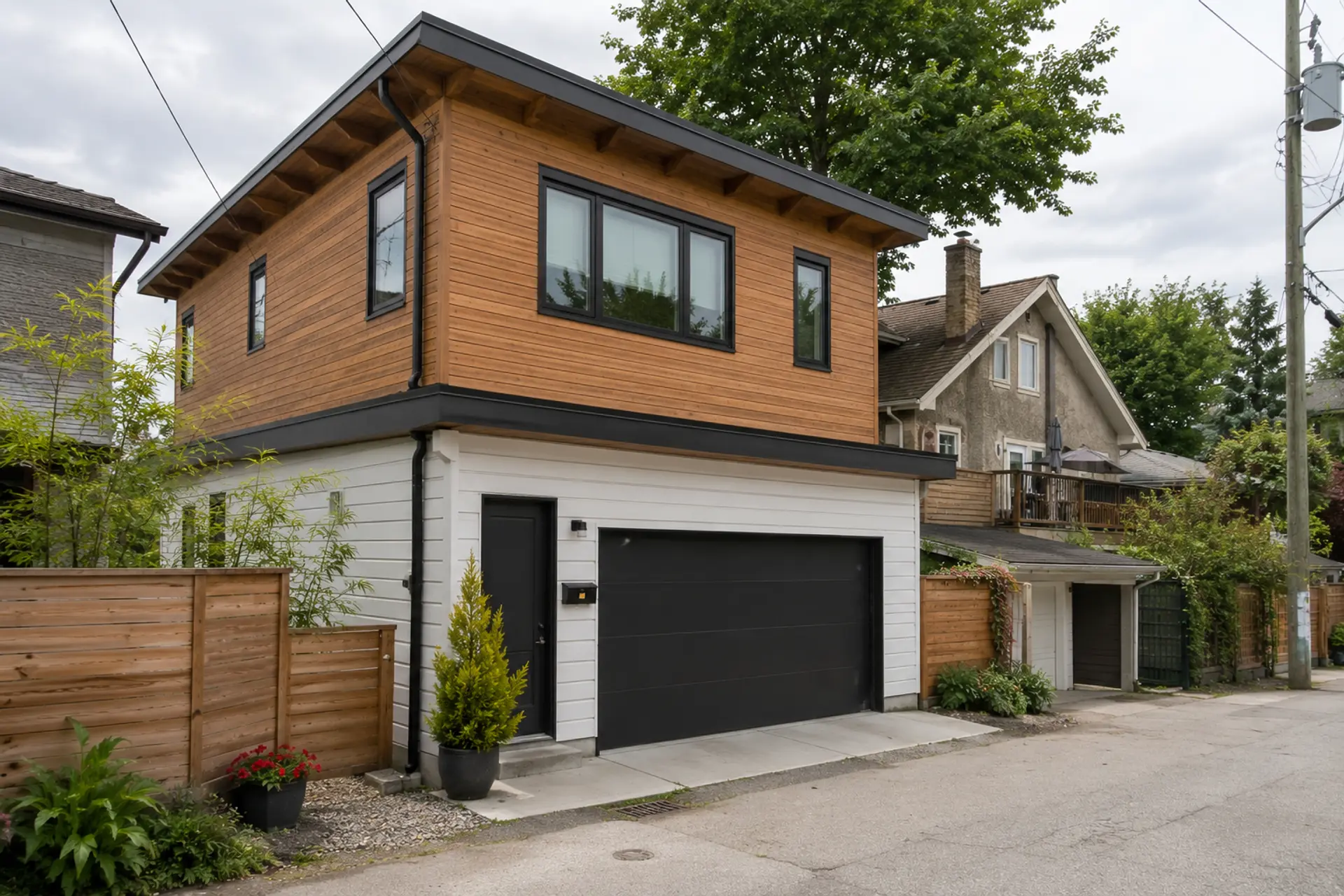
A Vancouver laneway house costs $400K-$650K to build, takes 12-22 months, and earns 3.8-5.2% net rental yield. Vancouver's R1-1 zoning lets you add one as of right — rental only, not sold separately.

Metro Vancouver strata fees run $0.55 to $0.90 per square foot, $440 to $720 monthly on an 800 sqft unit. Here is what they cover, where the money goes, and 5 red flags fees are about to rise.


