In BC a judge approves every foreclosure sale and other buyers can outbid you in court. In Ontario a lender sells under power of sale with no hearing. Here is what that changes for buyers.
Written by Hamidreza Etebarian on

Zealty shows 508 court-ordered sale listings in British Columbia today, November 9, 2026, and every one of them needs a judge to approve the sale before it can close. That is the main difference in power of sale vs foreclosure. BC lenders foreclose through the BC Supreme Court, and other buyers can outbid you at the approval hearing. In Ontario, most lenders sell under the power of sale written into the mortgage, follow the notice rules in Ontario's Mortgages Act, and no judge reviews the price. This post compares what that means for a buyer in each province: timelines, deposits, conditions, the chance of being outbid, and price.
A BC foreclosure is a court case. Under Rule 21-7 of BC's Supreme Court Civil Rules (current November 2026), the lender starts it by petition, the court fixes a redemption period for the owner to pay what is owed, and the court can order the property sold. When the lender accepts an offer, the party with conduct of sale applies for an order confirming the sale and vesting title in the buyer. That is why BC listings say "subject to court approval".
An Ontario power of sale is a private sale by the lender. Part III of Ontario's Mortgages Act, R.S.O. 1990, c. M.40 (consolidation current since January 1, 2022), sets the notice rules. Once they are met, the lender lists the home and signs an agreement much like any other seller. Under section 35, the lender's statutory declarations about the default, the notice and compliance with the Act are enough to give the buyer good title.
Each province's full process has its own guide: the BC foreclosure process and power of sale in Ontario. This post covers only the differences a buyer feels.
In BC, a judge does. The accepted offer and its terms go before the BC Supreme Court, and the court decides whether to confirm that sale or another one.
In Ontario, nobody outside the deal reviews it. The lender and the buyer sign, and the sale closes without a hearing. Section 36 of Ontario's Mortgages Act says the buyer's title cannot be challenged because the default or notice rules were not followed. Anyone harmed by that has a claim against the lender instead.
Sign up free to unlock real sold prices and sold dates across Greater Vancouver, Fraser Valley, and Chilliwack, including court-ordered sales.
See Sold PricesFree account required · sold data is hidden until you sign in.
In BC, yes. Other buyers can bring competing offers to the approval hearing, and the judge can approve one of theirs. Zealty's sold data shows how often prices end up above the asking price. Of 234 court-ordered sales on the Greater Vancouver, Fraser Valley and Chilliwack boards with sold dates from May 1 to October 21, 2026, 36.3% sold above their final asking price. Only 6.6% of the other 17,098 sales on those boards did over the same period. Not every over-ask result comes from a bid in court, but the gap is wide. Our breakdown of what BC foreclosures sold for has more on price.
In Ontario, a firm agreement with the lender has no hearing for a new bidder to join. The risk before closing is the owner. Section 22 of the Mortgages Act lets the borrower pay the arrears and the lender's expenses at any time before sale, so ask your lawyer how the lender's agreement handles that.
In BC, the court fixes the redemption period, commonly six months in BC practice, and can shorten or extend it. The listing stage is slow as well. The 234 court-ordered sales above took a median of 80.5 days from listing to sold date, against 26 days for the other sales.
In Ontario, the minimums are set by statute and run in weeks. Section 32 of the Mortgages Act bars notice until the default has lasted at least 15 days and bars the sale until at least 35 days after notice. Where a mortgage has no power of sale clause, section 24 supplies one after three months of default, and section 26 requires 45 days' notice before the sale.
In BC, you can write an offer with subjects, but you remove them before the hearing, because the court approves firm deals. If the judge approves someone else's offer, your deal does not go ahead, and you have already paid for the inspection, appraisal and legal review. Have your lawyer confirm how the contract handles your deposit in that case.
In Ontario, no court has to approve the deal, so an offer can carry ordinary conditions such as financing or inspection if the lender accepts them. Expect a lender's schedule attached to the agreement that strips out many of the usual seller promises.
In both provinces, the seller has never lived in the house. BC court-ordered listings are typically sold as is, where is, with no Property Disclosure Statement. In Ontario, section 28 of the Mortgages Act lets the lender convey only the borrower's estate and interest, and power of sale agreements normally exclude warranties about condition. Budget for an inspection and a title search either way.
In BC, the price is supervised and public: the sale and its terms go on the court record. In Ontario, nobody checks the number before closing. Section 27 of the Mortgages Act sets the order in which the lender must pay out the proceeds, with any surplus going to the borrower, but that protects the borrower, not you. Neither process guarantees a discount. In BC, the over-ask numbers above show how competition at the hearing can close the gap.
For certainty, Ontario. A firm power of sale agreement works like a normal purchase, with no hearing date to get through. For price information, BC. The court record is public, and BC sold data shows what similar court-ordered homes actually closed at.
If you are bidding in BC, plan for the hearing. Our court-ordered sales bidding guide covers how to position an offer. If you are buying in Ontario, put your effort into title and condition.
Use the Court-Ordered Sale filter on Zealty's map search or the BC list search to see current BC listings, then check each one's price history before you offer. Buying in Ontario? You can search active Ontario listings on Zealty. Zealty has no power of sale filter for Ontario, and its Ontario data covers active listings only, with no sold history. Whichever side of power of sale vs foreclosure you are on, the rules of the province where the home sits decide how your offer plays out.
This article is educational and is not legal advice. Talk to a real estate lawyer in the province where you are buying before you sign an offer on a foreclosure or power of sale property.
NOTE: This representation is based in whole or in part on data generated by Greater Vancouver REALTORS®, Fraser Valley Real Estate Board, Chilliwack and District Real Estate Board, or The Canadian Real Estate Association which assume no responsibility for its accuracy. This information is deemed reliable but is not guaranteed accurate by these organizations or by the agent or brokerage hosting this website. Data presented here is under the license agreement of Holywell Properties, a British Columbia Brokerage.

Ontario power of sale runs on notice periods, not court hearings: 15 days of default, then 35 days after notice. Here is what the Mortgages Act requires, what the lender owes the borrower, and what a buyer takes on.
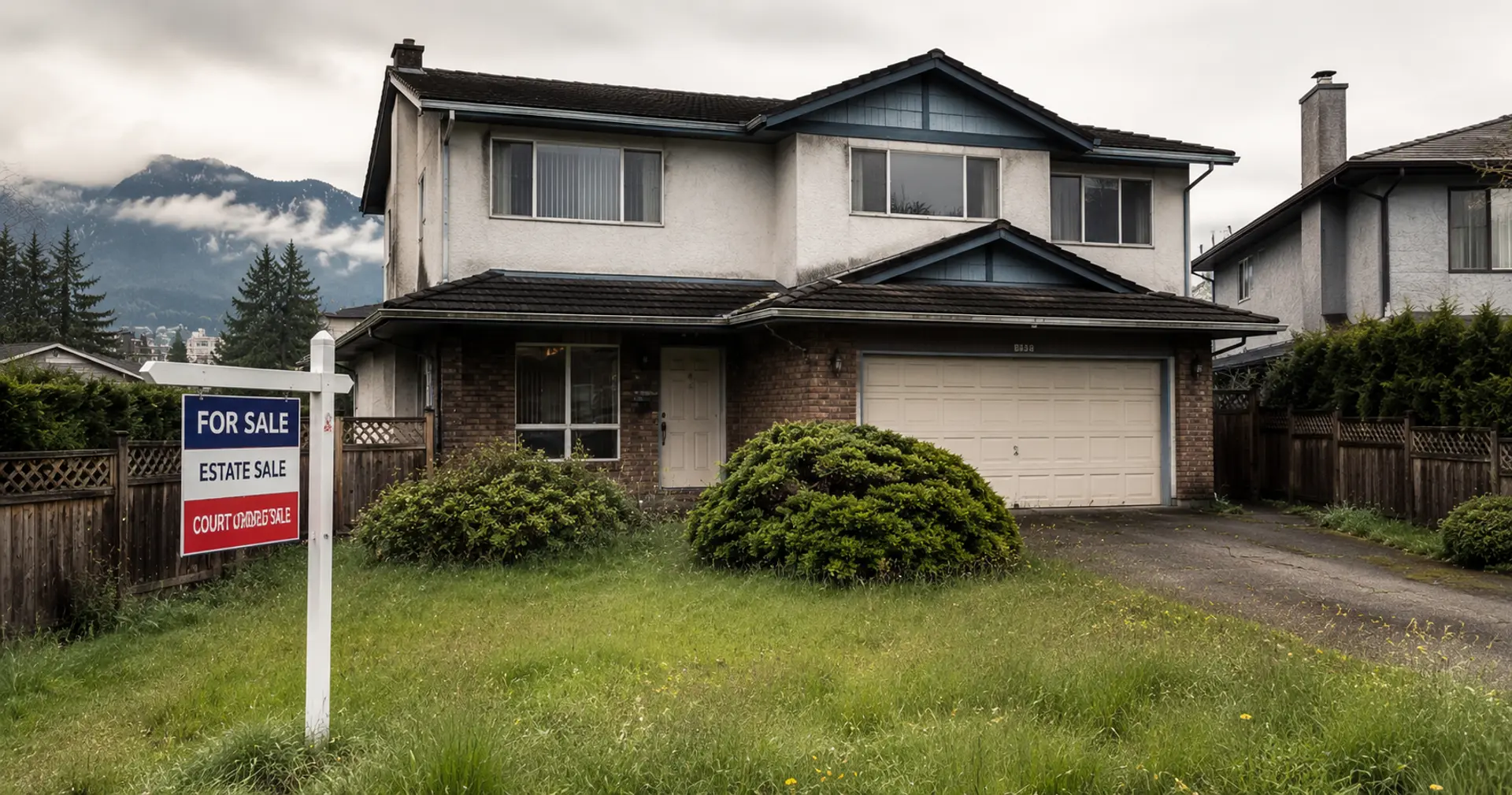
A BC foreclosure runs through the Supreme Court, not a bank auction. Here is the full timeline, the 6-month redemption period, and why your offer is not final until a judge approves it.

Learn how to bid at court-ordered sales auctions in BC and acquire properties at 10-20% discounts. Understand bidding mechanics, winning strategies, and investment returns.